What does a paver look like before sealing?
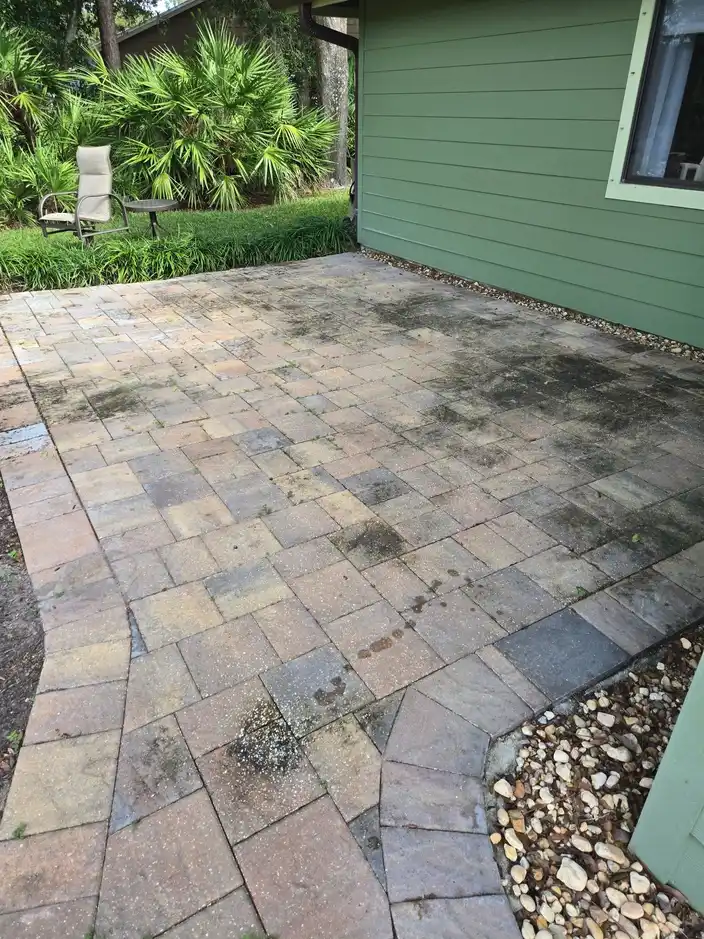
Unsealed pavers in Florida usually look faded, patchy, and dull. Common signs are green or black algae and mildew, gray film, oil drips on driveways, rust spots, weeds in the joints, and joint sand that has washed out.
Heat, humidity, and heavy rain all push growth into the pores of concrete and clay pavers, so surfaces often look darker and blotchier in shaded areas than in the sun.
What changes after cleaning and sealing pavers?
The first change comes from cleaning: pressure washing removes surface growth and grime, and the original color of the stone shows again. Sealing then adds a protective layer that deepens that color and makes the surface more even.
Sealers come in different finishes. A natural or matte finish looks close to bare stone but richer. A gloss or wet look makes color pop but can be slicker when wet, which matters around pools. Ask to see a sample on a spare paver or a small hidden area before choosing.
What does the paver sealing process involve?
A typical job runs in steps: clean the surface, treat stains, let the pavers dry fully, refill the joints with polymeric sand, then apply the sealer in even coats. Skipping the drying time is the most common cause of a cloudy or milky finish, because moisture gets trapped under the sealer.
Foot traffic is usually fine after about a day, and vehicles after a few days, though this varies by product and weather. Humid or rainy days can delay the work.
What won't sealing fix?
Sealing is not a repair. Cracked, sunken, or shifting pavers need to be reset first, and deep rust or old oil stains may only lighten. Sealer also will not stop every weed if the base underneath has problems.
Setting expectations before the job helps: a clean, uniform, protected surface is the realistic goal, not a brand-new installation.
How long does paver sealer last, and when should you reseal?
Most sealers last roughly two to five years, depending on the product, sun exposure, and how much traffic the surface gets. Driveways with cars wear faster than patios and pool decks.
A simple test: sprinkle water on the paver. If it beads, the seal is working. If it soaks in and darkens the stone, it's time to think about resealing. Regular rinsing and occasional gentle cleaning help extend the life.
Can you do paver sealing yourself, or should you hire it out?
DIY is possible, but it's easy to get uneven coats, streaks, or a cloudy finish, and renting a pressure washer used too aggressively can etch the surface or blow out joint sand. Sealer also has to go on during a dry stretch with the right temperature.
Hiring a pro makes sense for large driveways, pool decks, or when pavers are heavily stained. Whichever route you choose, don't seal over dirty or damp pavers.
Questions we hear
How long should pavers dry before sealing?
Usually at least 24 to 48 hours after cleaning, and longer in humid weather or shaded spots. Sealing over trapped moisture can leave a white, cloudy look.
Will sealing make my pavers shiny?
Only if you choose a gloss or wet-look sealer. Natural and matte finishes deepen the color without much shine.
Do sealed pavers still get algae?
They can, but sealing makes the surface less porous, so growth is easier to rinse off and tends to return more slowly.
Is paver sealing worth it?
For most patios, driveways, and pool decks it helps hold color, lock in joint sand, and make cleaning easier. The benefit is greatest on pavers in good condition that are sealed on a regular schedule.
Can you seal pavers right after pressure washing?
Not right away. The pavers and joints need to dry thoroughly first, and joint sand should be refilled and settled before the sealer goes on.